Journal of daily reflections on the progress of my home-based agriculture experiments, mixed with observations about life, peace, justice, faith, family, community and friends.

Palestinian Victims
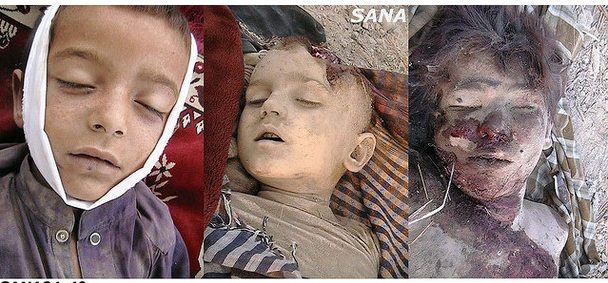
Yesterday I went to visit the American (Jewish) Holocaust Museum in Washington D.C. Despite the enormity of this genocide, all I could think about was the Palestine victims of the present Jewish occupation. I know there is no comparison but still could not forget what is happening to Palestinian people today. When will ever learn from history that such a removal of people from their homeland and the suffering and death it involves is wrong, no matter who is doing it.
See the full list of articles in the Diary of a Worm.
Quotes
Nonviolence
“Nonviolence is an active force of the highest order. It is soul force or the power of Godhead within us. Imperfect man cannot grasp the whole of that essence - he would not be able to bear its full blaze, but even an infinitesimal fraction of it, when it becomes active within us, can work wonders.”
- Mahatma Gandhi
First they ignore you
“First they ignore you, then they laugh at you, then they fight you, then you win.”
Nonviolent Jesus
“Everyone in the world knows that Jesus and His teachings were nonviolent except Christians.” M. Gandhi
A Biography of Dorthy Day by Jim Forest
Letter from Dorthy Day prime directive of Gospel
On Lent
In general, in the first flush of Lent, the struggle is undertaken bravely. What if during the long weeks the fervor lessens and the work of accumulating graces was continued with many lapses, but by effort of will. That time when will has to be brought into play is perhaps the most important of all, despite failures and the total lack of a sense of accomplishment, of growth. Fervor comes again with Holy Week, joy comes on the day of resurrection, with all nature singing exultantly God’s praises.
To keep united to God through the suffering Humanity of His son—that is the aim of Lent. — Dorothy Day from her column “Day After Day”, The Catholic Worker, April 1935
People Need to be Distrubed.
“When it is said that we disturb people too much by the words pacifism and anarchism, I can only think that people need to be disturbed, that their consciences need to be aroused, that they do indeed need to look into their work, and study new techniques of love and poverty and suffering for each other. Of course the remedies are drastic, but then too the evil is a terrible one and we are all involved, we are all guilty, and most certainly we are all going to suffer. The fact that we have “the faith,” that we go to the sacraments, is not enough. ‘Inasmuch as ye have done it unto the least of these my brethren, ye have done it unto me’ with napalm, nerve gas, our hydrogen bomb, our ‘new look’.” (“Are The Leaders Insane?” By Dorothy Day, The Catholic Worker, April 1954, 1, 6.}
Everyday Chores
“Paper work, cleaning the house, dealing with the innumerable visitors who come all through the day, answering the phone, keeping patience and acting intelligently, which is to find some meaning in all that happens — these things, too, are the works of peace, and often seem like a very little way.”
— Dorothy Day, On Pilgrimage, December 1965
Christian Need Not Fight
“The Christian does not need to fight and indeed it is better that he should not fight, for insofar as he imitates his Lord and Master, he proclaims that the Messianic kingdom has come and bears witness to the presence of the Kyrios Pantocrator [Lord of Creation] in mystery even in the midst of the conflicts and turmoil of the world.”
(In the chapter “The Christian as Peacemaker” Peace in the Post-Christian Era, 27–33).
There is no explanation of most of what goes on in our own hearts
“The heart of man can be full of so much pain, even when things are exteriorly all right”. It becomes all the more difficult because today we are used to thinking that there are explanations for everything. But there is no explanation of most of what goes on in our own hearts, and we cannot account for it all. No use resorting to the kind of mental tranquillizers that even religious explanations sometimes offer. Faith must be deeper than that, rooted in the unknown and in the abyss of darkness that is the ground of our being. No use teasing the darkness to try to make answers grow out of it. But if we learn how to have a deep inner patience, things solve themselves, or God solves them if you prefer: but do not expect to see how. Just learn to wait, and do what you can and help other people. Often it is in helping someone else we find the best way to bear our own trouble.” — Thomas Merton from his Christmas letter, 1966
Where we are all going?
…. “I am sick up to the teeth and beyond the teeth, up to the eyes and beyond the eyes, with all forms of projects and expectations and statements and programs and explanations of anything, especially explanations about where we are all going, because where we are all going is where we went a long time ago, over the falls. We are in a new river and we don’t know it.”
(extract from a letter from Thomas Merton to Daniel Berrigan)
Violence embedded in culture itself
“The real focus of American violence is not in esoteric groups but in the very culture itself, its mass media, its extreme individualism and competitiveness, its inflated myths of virility and toughness, and its overwhelming preoccupation with the power of nuclear, chemical, bacteriological, and psychological overkill. If we live in what is essentially a culture of overkill, how can we be surprised at finding violence in it? Can we get to the root of the trouble? In my opinion, the best way to do it would have been the classic way of religious humanism and non-violence exemplified by Gandhi. That way seems now to have been closed. I do not find the future reassuring,” — Thomas Merton edited with an introduction by Gordon C. Zahn (Boston, MA: McCall’s Publishing Company, 1971), p. 230
If you want to study modern history
If you want to study the social and political history of modern nations, study hell.-- Thomas Merton New Seeds of Contemplation, ch 17
worshiping the false self in place of God
“After all, what is your personal identity? It is what you really are, your real self. None of us is what he thinks he is, or what other people think he is, still less what his passport says he is… And it is fortunate for most of us that we are mistaken. We do not generally know what is good for us. That is because, in St. Bernard’s language, our true personality has been concealed under the ‘disguise’ of a false self, the ego, whom we tend to worship in place of God.” —Thomas Merton, The Waters of Siloe
Harcourt & Brace, 1949, p. 349
silence between words
“For language to have meaning, there must be intervals of silence somewhere, to divide word from word and utterance from utterance. He who retires into silence does not necessarily hate language. Perhaps it is love and respect for language which imposes silence upon him. For the mercy of God is not heard in words unless it is heard, both before and after the words are spoken, in silence,”
—Thomas Merton, “Philosophy of Silence,” in Disputed Questions
(NY: Farrar, Straus & Cudahy, 1960), p. 181
Civil Disobedience
“I submit that an individual who breaks a law that conscience tells him or her is unjust, and who willingly accepts the penalty of imprisonment in order to arouse the conscience of the community over its injustice, is, in reality, expressing the highest respect for the law” Martin Luther King, Jr.
Darkness and Light, Love and Hate
“Darkness cannot drive out darkness: only light can do that. Hate cannot drive out hate: only love can do that.” ~Martin Luther King, Jr.
Nonviolent Direct Action
“Nonviolent direct action seeks to create such a crisis and foster such a tension that a community which has constantly refused to negotiate is forced to confront the issue.” Martin Luther King Jr., Letter from the Birmingham Jail
America, you must be born again
“A nation that will keep people in slavery for 244 years will “thingify” them—make them things. Therefore they will exploit them, and poor people generally, economically. And a nation that will exploit economically will have foreign investments and everything else, and will have to use its military to protect them. All of these problems are tied together. What I am saying today is that we must go from this convention and say, ‘America, you must be born again!’” – Dr. Martin Luther King, Jr.
Change
“Change does not roll in on the wheels of inevitability, but comes through continuous struggle.”
Priority of Conscience
“And it is my conscience that compels me to say publicly that the exclusion of women from the priesthood is agrave injustice against women, against our Church and against our God who calls both men and women to the priesthood.” Fr. Roy Bourgeois in his letter to Maryknoll why he could not recant his belief and public statements that support the ordination of women.
“Over the pope … there still stands one’s own conscience, which must be obeyed before all else, if necessary, even against the requirement of ecclesiastical authority.” Archbishop Joseph Ratzinger, now Pope Benedict XVI,in his 1968 commentary on the Second Vatican Council’s document, Gaudium et Spes.
|
Nonviolence or Militarism
Breaking the Silence
Dorthy Day’s Worst Nightmare

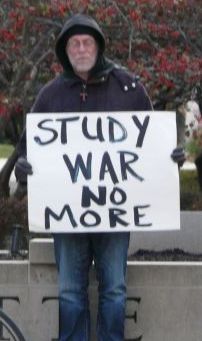
As we remember the assassination of Martin Luther King Jr. 50 years ago let us remember the three sicknesses of society that plagued us then and now, racism, militarism and excessive materialism.
The Three Evils of SocietyAddress Delivered at the National Conference on New Politics, August 31, 1967, Dr. Martin Luther King Jr.
Mr. Chairman, friends and brothers in this first gathering of the National Conference on New Politics. Ladies and gentlemen. . .can you hear me in the back? (No)
I don’t know if the Klan is in here tonight or not with all the troubles we’re having with these microphones. Seldom if ever. . . .has. . . .we’re still working with it.
As I was about to say, seldom if ever has such a diverse and truly ecumenical gathering convened under the aegis of politics in our nation, and I want to commend the leadership of the National Conference on NewPolitics for all of the great work that they have done in making this significant convention possible. Indeed by our very nature, we affirm that something new is taking place on the American political horizon. We have come here from the dusty plantations of the Deep South and the depressing ghettos of the North. We have come from the great universities and the flourishing suburbs. We have come from Appalachian poverty and from conscious-stricken wealth. But we have come. And we have come here because we share a common concern for the moral health of our nation. We have come because our eyes have seen through the superficial glory and glitter of our society and observed the coming of judgment. Like the prophet of old, we have read the handwriting on the wall. We have seen our nation weighed in the balance of history and found wanting. We have come because we see this as a dark hour in the affairs of men.
For most of us this is a new mood. We are traditionally the idealists. We are the marchers from Mississippi and Selma and Washington, who staked our lives on the American Dream during the first half of this decade. Many assembled here campaigned lasciviously for Lyndon Johnson in 1964 because we could not stand ideally by and watch our nation contaminated by the 18th-century policies of Goldwaterism. We were the hardcore activists who were willing to believe that Southerners could be reconstructed in the constitutional image. We were the dreamers of a dream–that dark yesterdays of man’s inhumanity to man would soon be transformed into bright tomorrows of justice. Now it is hard to escape, the disillusionment and betrayal. Our hopes have been blasted and our dreams have been shattered. The promise of a Great Society was shipwrecked off the coast of Asia, on the dreadful peninsula of Vietnam. The poor, black and white, are still perishing on a lonely island of poverty in the midst of a vast ocean of material prosperity. What happens to a dream deferred?It leads to bewildering frustration and corroding bitterness.
I came to see this in a personal experience here in Chicago last summer. In all the speaking I have done in the United States before varied audiences, including some hostile whites, the only time I have ever been booed was one night in our regular weekly mass meetings by some angry young men of our movement. Now I went home that night with an ugly feeling. Selfishly I thought of my suffering and sacrifices over the last twelve years. Why would they boo one so close to them? But as I lay awake thinking. I finally came to myself. And I could not for the life of me have less impatience and understanding for those young men. For twelve years, I and others like me, have held out radiant promises of progress. I had preached to them about my dream. I had lectured to them about, the not too distant day when they would have freedom, all here, now. I had urged them to have faith in America and in white society. Their hopes had soared. They were now booing me because they felt that we were unable to deliver on our promises. They were booing because we had urged them to have faith in people who had too often proved to be unfaithful. They were now hostile because they were watching the dream that they had so readily accepted, turn into a frustrating nightmare. This situation is all the more ominous, in view of the rising expectations of men the world over. The deep rumblings that we hear today, the rumblings of discontent, is the thunder of disinherited masses rising from dungeons of oppression to the bright hills of freedom. All over the world like a fever, freedom is spreading in the widest liberation movement in history. The great masses of people are determined to end the exploitation of their races and lands. And in one majestic chorus they are singing in the worlds of our freedom song, “ain’t gonna let nobody turn us around”.
And so the collision course is set. The people cry for freedom and the Congress attempts to legislate repression. Millions, yes billions, are appropriated for mass murder; but the most meager pittance for foreign aid for international development is crushed in the surge of reaction. Unemployment rages at a major depression level in the black ghettos, but the bi-partisan response is an anti-riot bill rather than a serious poverty program.The modest proposals for model cities, rent supplement and rat control, pitiful as they were to began with, get caught in the maze of congressional inaction. And I submit to you tonight, that a Congress that proves to be more anti-negro than anti-rat needs to be dismissed. It seems that our legislative assemblies have adopted Nero as their patron saint and are bent on fiddling while our cities burn.

Phil Berrigan
“We are accustomed to a culture of indifference and we must strive and ask for the grace to create a culture of encounter, of a fruitful encounter, of an encounter that restores to each person his or her own dignity as a child of God, the dignity of a living person.” (Pope Francis)
“He who goes about to reform the world must begin with himself, or he loses his labor.” (St. Ignatius of Loyola)
“Fight all error, but do it with good humor, patience, kindness, and love. Harshness will damage your own soul and spoil the best cause.” (St. John of Kanty)
“The whole history of the progress of human liberty shows that all concessions yet made to her august claims have been born of earnest struggle.” (Frederick Douglass)
Hating another person does harm both to those who suffer discrimination and those who discriminate and oppress others. (Archbishop Wilton Daniel Gregory December 2, 2016, Catholic News Service)
But before we pray for the coming of the Holy Spirit of peace upon us, I think it is helpful to name the horrific reality of these dark times, namely, that we are possessed in varying degrees by the evil spirit of war and violence. The evil spirit seeks to discourage us, and to keep us quiet, indifferent, apathetic and afraid. The evil spirit wants us to mind our own business and look the other way while it stirs up war and kills our sisters and brothers. The evil spirit is behind every act of violence, every bomb, every murder, every execution, every abortion, every assassination, every starvation and every war.” (John Dear, The Holy Spirit of Peace, May 28, 2004)
“If there is no struggle, there is no progress. Those who profess to favor freedom, and yet depreciate agitation, are men who want crops without plowing up the ground. They want rain without thunder and lightning. They want the ocean without the awful roar of its many waters. This struggle may be a moral one; or it may be a physical one; or it may be both moral and physical; but it must be a struggle. Power concedes nothing without a demand. It never did and it never will.” (Frederick Douglas)
“Learn from yesterday, live for today, hope for tomorrow.” - Albert Einstein
“Since war itself is the most extreme form of terrorism, a war on terrorism is profoundly self-contradictory.” -Howard Zinn
“Whoever works righteousness, man or woman, and has faith, verily, to them will We give a life that is good and pure, and We will bestow on them their reward according to the best of their actions.” Quran 16:97
“In the Catholic Worker we must try to have the voluntary poverty of St. Francis, the charity of St. Vincent de Paul, the intellectual approach of St. Dominic, the easy conversations about things that matter of St. Philip Neri, the manual labor of St. Benedict.” - Peter Maurin, co-founder of the Catholic Worker movement
Jokes and Editorial Cartoons
Neuroscience
Restoring the Senses, Gardening and Orthodox Easter
MAPS
|